THE SACRED COMPUTER - СВЕЩЕНИЯТ СМЕТАЧ, a.k.a. ARTIFICIAL MIND: Thinking Machines, Creativity and Human Development. A pioneering virtual Research Institute for Artificial General Intelligence (AGI), Cosmism and Transhumanism, AI, Software, Interdisciplinary General Research, Creativity, Versatility, Universal Men ~ Twenkids etc. Created in 2000. (...)
Божидар Саръбоюков скача 8.49 м в Пловдив в шести опит и подобрява за втори път националния рекорд в едно състезание след 8.37 м.
July 14 2026, Plovdiv, Bulgaria
Video: Tosh Twenkid Studio, The Sacred Computer
Видео: Тош, Свещеният сметач: Мислещи машини, творчество и развитие на човека
#longjump#bulgaria#plovdiv#athletics#trackandfield
A funny part from the "Bulgarian Predictions" (or Bulgarian Prophecies) which were mostly about AGI, AI, Theory of Universe and Mind, generative AI, the phenomenon that "Creative intelligence will be first surpassed and blown-away by the thinking machines ... and intellectual work will be done in 1 ms for free - the smart "asses" will be useless - not that we WERE useful before that" (2013)
Yesterday I realized another prophecy of mine, which guessed one exact number* in the pilot episode of my satirical comics series "Super Smartasses", that presented the world of the Semiconductor industry in late 2000s.
First drawn and published in the summer of 2012 (colorized recently with Gemini)
MENTEL and AND lay off 15K Real Engineers!
On 1.7.2008 the newspaper reports (with filled words for more complete syntax):
" ... The VP of Mentel ... Sorry, I need to save ... I wish them all the best - they are real professioals" - the VP said ... The financial crisys ... World economy ... New Cure 2 CPUs ... But Banks ... Low Sales ... Revenue ...
Next Issue will be with a reduced print of 15K - pre-order NOW!
The semiconductor manufacturer will cut 3,000 employees in Oregon as it looks to trim $10B by the end of next year.
Intel axes 15,000 jobs after sales tumble
Nick Edser & Natalie ShermanBusiness reporters, BBC News
https://www.bbc.com/news/articles/c16j3318n08o
I will release the enhanced colorized version of the draft after wrapping it up - I'm still refining some of the images. Nano Banana doesn't always "listen" to all of the instructions and if you get one thing correctly, another onject may disappear etc.
Реалистично фентъзи, вдъхновено от Властелинът на пръстените - по пътя към Хилядолетния рай на светлото бъдеще. Сатира, комедия, фентъзи, анимация.
Произведен с "Arnoldifier", системата за дийпфейк кино, Twenkid FX Studio (кадрите от "Звездна симфония в Чепеларе") - създадени в Пловдив от Тош/ "Свещеният сметач".
Използва кадри от "Властелинът на пръстените III", реж. Питър Джаксън. OpenDalle11 за заглавната картина. DaVinci Resolve (краен монтаж).
С участието на модели на Мария Габриел и Григор Сарийски
Гледайте филма: https://youtu.be/KXC68MbczMg#българия#еврозона#политика
Гледайте и първата част: "Амбългъл: Властелинът на пръстените на България I" (дийпфейк).
Сценарий, звук, монтаж, актьор в ролите, програмист: Тош
Дийпфейк система: Тош.
Видеото е с български звук. Най-общо въведение и представяне на програмата Twenkid FX Studio Alpha 0.1 - издание от декември 2021 г. Twenkid Studio е може би единственият ютюб канал, който си има собствена програма за монтаж и визуални ефекти.
Тя е може би най-компактната система с подобни възможности - инсталационният файл е само 300 КБ, ръководството е 2 МБ заради многото снимки.
Следват продължения с подробно ръководство за употреба, уроци и пр. Засега: инфо, ръководство (на английски) и изтегляне на програмата:
http://twenkid.com/fx
https://github.com/Twenkid/Twenkid-FX-Studio/
Ако харесвате канала, подкрепете го като се абонирате, споделяте, коментирате, харесвате!
Twenkid FX Studio Alpha release - Video Editor and Visual Effects Software Introduction - Part 1
My custom video editing and effects software prototype that had to be first released 11 years ago after the initial R&D effort, possibly open source, but (...) This editor was used for the production of many videos in my Youtube channel with the most complex one looking impressive anyway: the artistic lyrically-"muscle art" music video suite "Star Symphony in Chepelare", with its most part being a VFX (cartoon-like), embracing a bunch of custom visual effects and color grading, implemented from scratch; a complete director's version, short version, action version and a lyrical forest only version.
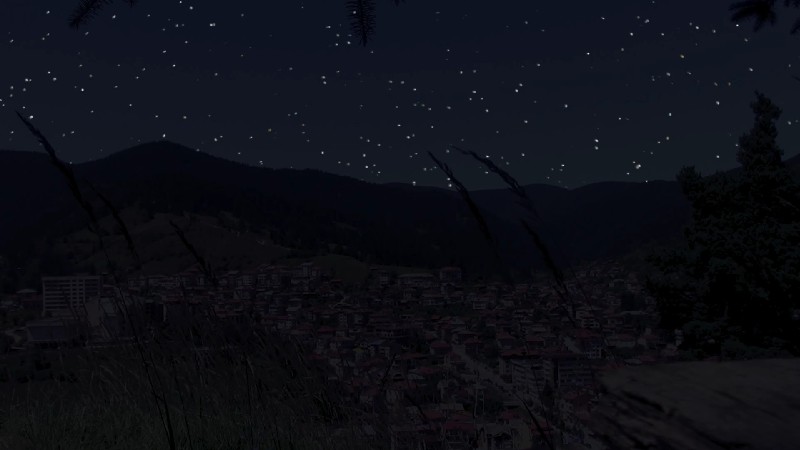
An Unreal Star Storm watched from the forests of the Rhodope Mountains, Bulgaria
The premiere of my new music video - a poetic and artistic production with beautiful 2D visual effects, produced using computer vision for automatic compositing, masks generation, objects removal etc. Edited and rendered using my inhouse software "Twenkid FX Studio".
Watch in darkness and on a big screen in 1920x1080!
"Twenkid FX Studio" is an endless "prototype" in which I've invested too little time and had to redesign a long time ago. Using Win32 sounds a bit insane, but my choice when I started was because there were issues with the usage of another "default" and having bad reputation simple windows library (MFC) - I used Visual Studio Express.
Sure, there were free GUI class-libraries, but I preferred a smaller code base that was not dependent on additional huge third-party libraries* such as wxWidgets (which was considered and maybe I was wrong not to develop with it).
Qt had some issues with the license - I didn't want my system to be GPL, and their other license fee was unreasonable. Maybe I could try GTK, but it's also bloated with a lot of dependencies and verbose method calls, similarly to wxWidgets, so apart from being multiplatform, I don't know would it be "simpler" to work with than Win32 or my own Win32 wrapper.
Furthermore, at the time when I started, FFmpeg or other Linux video libraries seemed undocumented/unaccessible, while I found a windows' one, although a bit outdated - VFW (Video for Windows). DirectShow was the more appropriate choice, but it seemed to me that it had more complex interface and harder access to the raw bitmap, so I decided to use VFW and not delve too much. Maybe I was wrong here again, I had to spend some more time on DirectShow.
(*Regarding huge code bases with too many fragmented modules - respectively I don't like Boost with its 999999 tiny little files, most of which not used.)
So I started with simple Win32, I developed also simple wrapper classes for some controls. I didn't care that it didn't look "beautiful" or "modern", the buttons look-and-feel was not important.
One reasonable design choice was to develop the GUI in C# with an interface to the core processing through pipes, sockets or memory mapping (file-mapping in Windows), it's still an option. It would go with a "standardized" interface to the core editor so that it could be controlled from all kinds of external GUIs. I did something like that with my speech synthesizer "Toshko 2.070", but only for simple input, not full API to its internals.
Another possibility is Lua and/or automatic generation of the GUI from the specifications.
...
Historically, there were years with zero or a few lines of code added to the project and unfortunately the editor's GUI is still underdeveloped and ugly for casual users which prevents it to be released for external usage out of my "in-house" needs.
It's pretty fast for some tasks, though. For example, Twenkid FX loads the long version of the "Star Symphony", including alternative disabled video segments and overlays, 200 full HD video files in total, for the first time in a fresh session in about6-7 seconds1.5-2 seconds from a laptop's mechanical HDD and external HDD. Maybe that's the total seek-time for so many files.
If the project is then closed and re-opened again, it loads and is ready in just 2 seconds.
(It seems that test run was with a highly loaded RAM and page-file slowing it down).
The GUI has to be improved, though, and possibly rewritten in a multiplatform way to escape that Windows dependency. I've been thinking about that from time to time, but it requires enough of focus to start.
Perhaps it would be based on FFmpeg, OpenCV and OpenGL, maybe using multiple programming languages (Python and C++, maybe others) with a custom GUI written on top of OpenGL and OpenCV or some light GUI or gaming library, unless I changed my mind and continued with Windows and a DirectX11-12
Also it's supposed to start utilizing some form of AI already, of course. Finally...
...
Custom VFX system and effects for the movie:
* Python,OpenCV with Python, Numpy; a little C++ and OpenCV in C++ for some retouch work of already rendered video segments during the final stage of the editing.
I started with Python because I had a prototype for simple reviewing and cutting, besides my main GUI NLE editor. Of course I was assuming that it would be easier to experiment with OpenCV, even though I knew it'd be slower, and initially I didn't know how far I'd go with the visual effects.
I could use C++ without a big hurdle, since I had experience and experiments with OpenCV C++ as well such as applying computer vision processing over pictures and frames of videos, traversing pixels and changing them during playback etc. The heavier editing system Twenkid FX C++/Direct3D9 was also an option, especially as HLSL shader, the only simple way to add new effects. However it needs a general and sophisticated plug-in subsystem, which is still lacking.
So I took the Python road this time.
It got too slow for some operations, then some tricks with Numpy fancy indexing sped it up, for one of the early effects: 60 times, from about 30 seconds per frame to about 0.5 seconds per frame. However it still remained slow for complex effects, sometimes taking several seconds per frame.
Ironically, the slow speed sometimes was "right", allowing real-time adjustments during rendering, virtual camera operating for Pan & Scan sequences etc., without slowing down the playback or stepping manually frame-by-frame.
Of course, I had better worked with C++ and GLSL or/and HLSL shaders from the start.
CogAlg Prize
Nevertheless that performance-wise wrong design decision and involvement with Python and Numpy directed me to check the CogAlg* project, then eventually to contribute to the debugging of the stuck frame_dblobs function and to win a prize.
Python is a bad choice for a "non-neuromorphic deep learning" for computer vision at the low level of the system, which is expected to require a zillion of operations before starting to produce meaningful output, though. Besides CogAlg's code is getting progressively unreadable.
This is another story, though.
* B.K. is the creator of "Cognitive Algorithm" project, but I recalled that I first called it with that shorthand "CogAlg" in an e-mail a few years ago, and he adopted it.
What's going on lately?
The second SIGI conference was postponed - not enough commitment from the circle.
But I am working on making the conference more interesting when it happens:
I've been into a Mathematical research mode lately, I started it as "Incremental Arithmetic" in an unpublished paper (shared with one person only) in 2011, some insights from 2010-2011 were around that theme. More explicitly on this - when I have beautiful results and demos. :)
Other AGI research/observation/preparations and Neuroscience-my-theory-of-intelligence-matching - it's in parallel with the above.
I've always been a "visual" person (besides all other "persons" living in me), drawing runs in the blood of my family. Drawing/painting - rendering - is useful for focusing on the details of rendering and vision, and it goes from the smallest scale of a pixel to the largest scale of scenes, viewer's position, scene composition, lightning, characters, the world where the illustrated action happens, the story of it, etc. etc... The whole spectrum of generalizing sensorimotor hierarchies. It's cool.
I'm refreshing and upgrading my skills into a more systematic way and I'm aiming to polish my talent. One of the useful reasons is in order to render my graphical/movie stories better... :) The VFX/filmmaking software's one of the many purposes is to improve and speed up the process.
In another "unpublished paper" from a few months ago, which would turn into a digest one day eventually (it's a "published email discussion), I explained and shared some elegant fundamental AGI operations/generalizations which are based on simple visual 3D transformations.
"Everything" is a bunch of vector transformations and the core of the general intelligence are the simplest representations of those "visual" representations, which are really simple/basic/general.
And "visual" in human terms actually means just:
Something that encompasses features and operations in 1D, 2D, 3D and 4D (video) vector (Euclidian) spaces, and the vectors in these dimensions can be of dimensionality usually of up to 4 or 5, such as: //e.g. (Luma, R,G,B)
1D - luminance
2D - luminance + uniform 1D color space
3D/4D - luminance + splitted/"component" color space
+ Perspective projection, which is a vector transform, it can be represented as a multiplication of matrices - that is - the initial sources of visual data are of higher dimensionality than the stored representation, 3D is projected into 2D (a drawback of the way of sensing)/
Also, of course, there is topology, humans work fine with blended and deformed images - curved spaces, and curves, not simple linear vectors. However the topology is induced from the basic vector spaces, the simplest topological representation is just the adjacency of coordinates in a matrix.
The above may seem obvious, but the goal is namely to make things as explicit as possible.
More on it - later.
The software and music - I don't have enough time for R&D, I'll probably tell more when there are results/pieces which I can show, such as tech demos or new demo records of my music... [Edit+ 2/10/2012:] But the music will probably wait untl I finally develop one software aid for the drums and start playing with it. :)
I wasn't able to work on the system last few weeks, but it's evolving steadily. Yet too early a version for external users.
Produced: Tosh Directed and Camera operator: Tosh Starring in video segments: Tosh, Kaloyan and others. Green Screen camera operator: Vassil Krastev Editing: Tosh
Последните няколко седмици нямах време да развивам системата, но тя стабилно върви напред. http://fx.twenkid.com
Думи: Twenkid FX, Visual Effects, Twenkid Research, Visual Effects, Editing, Визуални ефекти, Видеообработка, Монтаж, Новини, Compositing, композитинг, български, софтуер, ефекти, компютърни, Chroma Keying, зелен екран, забавен, каданс, ускорен, стабилизация, компенсация, motion compensation, postprocessing, image stabilization, video crop, multi screen, video in video, remove objects from video, removal objects from video, премахване на обекти от видео,
An experiment from 2005. A combination of two videos with masks for the intersections.
The video editor/NLE/computer graphics environment I'm developing has no name yet and is getting its basic capabilities yet - opening video file, rendering 3D-graphics, postprocessing video, outputting to file. It's supposed to serve at least for the visual special effects needed for my fantasy short film "The Gift".
I've been waking up my old-old passion for computer graphics, started as early as 90-ies. :) Smooth bit-mapped animation at 35+ fps, wire-frame 3D and a bit of texture-mapping on an 1.018 MHz Apple][ clone Pravetz-8M... There was even an animatronic/animation science-fiction movie partially done, with some music and test audio recordings. :)
...
Работя по свой видеоредактор/среда за компютърна графика/визуални ефекти. Все още в съвсем ранна фаза. Би трябвало да послужи за специалните ефекти на "Подарък".
"Trigonometric-3D" - I would call it "ellipse perspective transformation", my own invention from 1999 on a Pravetz-8M (Apple II clone).