THE SACRED COMPUTER - СВЕЩЕНИЯТ СМЕТАЧ, a.k.a. ARTIFICIAL MIND: Thinking Machines, Creativity and Human Development. A pioneering virtual Research Institute for Artificial General Intelligence (AGI), Cosmism and Transhumanism, AI, Software, Interdisciplinary General Research, Creativity, Versatility, Universal Men ~ Twenkids etc. Created in 2000. (...)
An original, unusual and very funny glimpse into a corner of the semiconductor industry, presented in the pilot episode of a series conceived in 2009 and first published in 2012.
Have fun and support The Sacred Computer: Thinking Machines, Creativity and Human Development
The main volume of "The Prophets of the Thinking Machines..." will be published soon and the next virtual conference: SIGI-2026 is starting on 1.1.2026. Be an early-bird there, LOL. :))
The next work is "Genesis: Creating Thinking Machines" and it is not designed to be "just" a set of 20-some books, monographs and papers, more than 4000 pages. (...)
Премиера на оцветената и подобрена версия на пилотния епизод на сатиричния ми комикс "Суперумници" (2012) - весели приключения и абсурди от полупроводниковата индустрия и живота: https://twenkid.com/smartasses/2025/
Първи епизод: "Спътници" (Companions)
* Идея, текст и рисунки с молив: Тош (Идея и описания на няколко епизода/скици на сторибордове: 2009 г.; първи осъществен голям пилотен епизод: лятото на 2012 г.)
* Оцветяване и подобрения на някои от рисунките (12/2025): Тош с Gemini и единични "ръчни" (наложи се едно завъртане: Horizontal-Flip;*) Някои от рисунките от черновата са запазени както са или само леко са оцветени при точно запазени контури и като цяло се стремях да се следва композицията, формите и стила на оригиналите с изключения, където не беше възможно или пък ми хареса както е. От линковете горе може да се види и оригиналната версия с молив.
* Сюжетът е вдъхновен от легендарна компания, която по-късно беше закупена от "Broadcom", след като много години работеха в тясно сътрудничество. "Броудком" днес се води с капитализация около 1.67 трилиона долара, около 2008-2009 - 3-4 милиарда (по-късно ги купуват за 37 милиарда през 2015 г., и после купуват и въпросната друга компания през 2016 г. и приемат името ѝ) Дали някой колега е бил "играч" и си е купил акции навреме?
...
* С повече дорисуване на скици или скиците можеше да се подобрят още образите, но не ми се занимаваше достатъчно за, само пробвах някои подсказки и не се получаваха.
ChatGPT translation:
Premiere of the colorized and enhanced version of the pilot episode of my satirical comic “Superumintsi” (2012) — cheerful adventures and absurdities from the semiconductor industry and from life: https://twenkid.com/smartasses/2025/
Episode One: “Companions”
Concept, text, and pencil drawings: Tosh (Idea and descriptions for several episodes / storyboard sketches: 2009; first fully realized large pilot episode: summer 2012)
Coloring and enhancements of some of the drawings (12/2025): Tosh with Gemini, plus a few manual touch-ups (one horizontal flip was required).* Some drawings from the draft were kept as they were or only lightly colorized, with the original outlines preserved. Overall, I aimed to follow the composition, shapes, and style of the originals, with exceptions where that wasn’t possible or where I preferred it as is. The original pencil-only version can also be seen via the links above.
The story is inspired by a legendary company that was later acquired by Broadcom, after many years of close collaboration. Broadcom is now listed with a market capitalization of about $1.67 trillion; around 2008–2009 it was valued at $3–4 billion (they were later acquired for $37 billion in 2015, and then went on to acquire the other company in question in 2016 and adopt its name). Did any colleague happen to be a “player” and buy shares in time?
…
With more redraws or further refinement of the sketches, the characters could have been improved even more, but I didn’t feel like investing the extra effort— I only tried a few prompts, and they didn’t turn out well.
--------------------
The Sacred Computer's Lab
In the meantime, now that I’ve finished the major “time waste” of the Biblical book surveys and defending the priority of my contributions, it’s time for real work. I want the handicap I gave to the AI opportunists back! :))
You can help me if you wish: donate hardware or services, support me, connect and help in the development and experiments.
According to early 2010s "wishful" ideas and designs, while working on the Infrastructure, and to what was counted as an AGI, universal artificial intelligence, a thinking machine, capable to think and create at a single human/super-human level/speed/scale/performance/quality/complexity level*, were "dreamed" to work on a quad-core PC with 32 GB RAM and a desktop GPU from that era - equipped with sensors: one or several cameras, microphones, Internet and other sensors, used for bootstrapping - without pre-trained and existing modules which are now available, we may not count them in the requirements. :)
Whether that would be enough - we will see.
Ask if you are interested in these articles or search the blog in 2013-2014, Issues on AGIRI list, "What's going on - Everything", "The infrastructure" (now called Vsy, Jack of All Trades, Вседържец etc.)
* I.e such a machine is not required to be capable of generating photorealistic 4K videos in real time - this is vastly superhuman. It should be at least as fast as me or reasonably slower.
A funny part from the "Bulgarian Predictions" (or Bulgarian Prophecies) which were mostly about AGI, AI, Theory of Universe and Mind, generative AI, the phenomenon that "Creative intelligence will be first surpassed and blown-away by the thinking machines ... and intellectual work will be done in 1 ms for free - the smart "asses" will be useless - not that we WERE useful before that" (2013)
Yesterday I realized another prophecy of mine, which guessed one exact number* in the pilot episode of my satirical comics series "Super Smartasses", that presented the world of the Semiconductor industry in late 2000s.
First drawn and published in the summer of 2012 (colorized recently with Gemini)
MENTEL and AND lay off 15K Real Engineers!
On 1.7.2008 the newspaper reports (with filled words for more complete syntax):
" ... The VP of Mentel ... Sorry, I need to save ... I wish them all the best - they are real professioals" - the VP said ... The financial crisys ... World economy ... New Cure 2 CPUs ... But Banks ... Low Sales ... Revenue ...
Next Issue will be with a reduced print of 15K - pre-order NOW!
The semiconductor manufacturer will cut 3,000 employees in Oregon as it looks to trim $10B by the end of next year.
Intel axes 15,000 jobs after sales tumble
Nick Edser & Natalie ShermanBusiness reporters, BBC News
https://www.bbc.com/news/articles/c16j3318n08o
I will release the enhanced colorized version of the draft after wrapping it up - I'm still refining some of the images. Nano Banana doesn't always "listen" to all of the instructions and if you get one thing correctly, another onject may disappear etc.
The upcoming study/long article/mini-monograph "Universe and Mind 6" revisits and continues and connects the analysis of topics, concepts ideas of the original Theory of Universe and Mind, the recently published work against the requirement of Mortal computation for thinking machines and other works and the related schools of thought of Friston, Levin, Solms etc. This work was written mainly in the spring of 2023, but kept for publishing the whole book "The Prophets of the Thinking Machines: ..." which is not published yet. It is possibly that it could grow in size.
"Calculus of Art" had a similar fate - it was written in late 2012, about December 2012 in English, started as an answer to a work by a researcher related to Music aesthetics, however I did not concluded and published it back then. It will appear in Bulgarian both in my AI Bible and as articles at the conference.
Now it would either be titled as "Part I" since it may be extended with more details in a future work, or I may edit it as a more thorough work.
More info: later.
Todor Arnaudov: Calculus of Art: Critics of the methodological faults in the wrongly manifested as “new” hypotheses in the paper ... 7.12.2012 ... + ... Математически анализ на
изкуството
Тодор Арнаудов
~ декември 2012 г. [непубликувано до сега, работна версия, идеи]
Коментар с разсъждения, отговор към статията ... Превод
на български на непубликувана чернова.
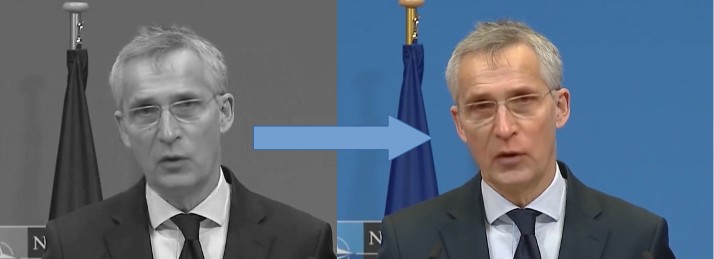
I had the colorization in mind before I started the refactoring of Deepfacelab to include grayscale models, and lately I added this functionality, for now as a POC, to be published later. The colorization is done with a Pix2Pix model (based on the example on Colab with the facades, maps etc.), trained on the faceset of the color video - grayscale faces converted to color. There is a step of color stabilization, which was required for more pleasant output, because without that there was slight, but noticeable flickering. The experiments for now were only on a single video/segment (about 1000 frames training of the pix2pix model) and without pretraining on other/various faces - that is something to be done in the future.
I am still pushing the limit of a GF 750 Ti 2 GB - so now it can produce 192x192 color lip-synced deepfakes with reasonable quality. The SAEHDBW DF-UDT model is about 345 MB initially (a bit more when trained), the Pix2Pix model is about 131 MB.
Note that the pix2pix model did fit in GPU only 128x128, but a sharpening at the end of the pipeline improves the image even more than the original grayscale one. Training at 256x256 on the CPU is a possible option, too, because the pix2pix model seems to be fast and also possibly the applied color stabilization can repair some fluctuations, i.e. possibly it can be not perfectly trained and still capable to produce decent results - that is to be verified with other videos. I haven't tried to colorize the Arnold's model yet.
The glasses of Stoltenberg are in most cases reasonably depicted, except a few little glitches from the grayscale model.
After investigation of the properties of the colorized faces, debugging of the merging, there was a successful application of an idea for stabilization of the colorized output and merging with precomputed faces (for other usages as well, e.g. prerendered 3D-models or synchronously performing faces etc.). In the video example below the output is also sharpened after merging (whole frame) - it needs to be per face only etc. or to have some antialiasing eventually.
The color-gamma stabilization is done by first probe-rendering all faces, computing their total pixel weight per frame and the average of all frames, then adjusting the gamma for each frame according to the average in order to flatten the fluctuations: if the face is too dark - it gets lighter and vice versa. Indeed, this phenomenon itself is to show some intrinsic properties of the pix2pix model.
Finally there is sharpening and merging is performed using these corrected faces.
...
* The neural model didn't capture the blue tint of the model's eyes, but it had a little excuse - the color of the eyes in the video varies and even there are frames where the ground truth eyes are different colors: one is very gray-blueish-purple and the other one - brown.
Depth camera body art / muscle art - done with two Logitech C270 and opencv coding in python. If anyone cares, the code is in my github repository that is linked in the video description, in the recent commits. Note that the current version of the code is experimental and not polished. That output also could be interpolated etc. to fill-in black discontinuities etc., however as of "art" they serve as contours etc.
Author, coder and model: Todor.
To be continued...
...
"Бодиарт"/мускулно изкуство създадено чрез стерео камера (3D-камера, камера за дълбочина). Направих го с две камери Лоджитек C270 и програмиране на Питон с OpenCV. Автор, програмист и модел: Тодор - Тош.
Watch the Wild Plovdiv in the "Sacred Computer" e-zine
The Wild Life in the city of Plovdiv, depicted in poetic, calming, majestic and comic music videos with animals, birds, views and sounds. Wonderful pictures, ironic cats' yawns and fights in the fig forest, laughing sparrows, walking in forests' labyrinths; giggling crows, diving in the evening skies; restless squirrels with their nuts; mother collared dove, teaching her children to fly; easygoing cats and fearful kittens; butterflies, surviving a storm; curious little owls with their fluffy outfit and other beauties, invisible for naked eye.
Created by (C) Todor Arnaudov 2019, Music by (CC) Kevin MacLeod.
Дивото в Пловдив в поетични, успокояващи, величествени и комични музикални видеоклипове с животни, птици, гледки и звуци. Приказни картини, иронични котешки прозявки, смеещи се врабчета в горски лабиринти и кикотещи се гарвани, гмуркащи се в гаснещата синева; трескави катерички с орехите им; майки гугутки и техните деца, учещи се да летят; безгрижни котараци и плашливи котенца; пеперуди, оцеляващи в буря; любопитни чухалчета с пухени премени и други красоти, неуловими с просто око. Автор и продуцент: (C) Тодор Арнаудов 2019. Музика: (CC) Kevin MacLeod.
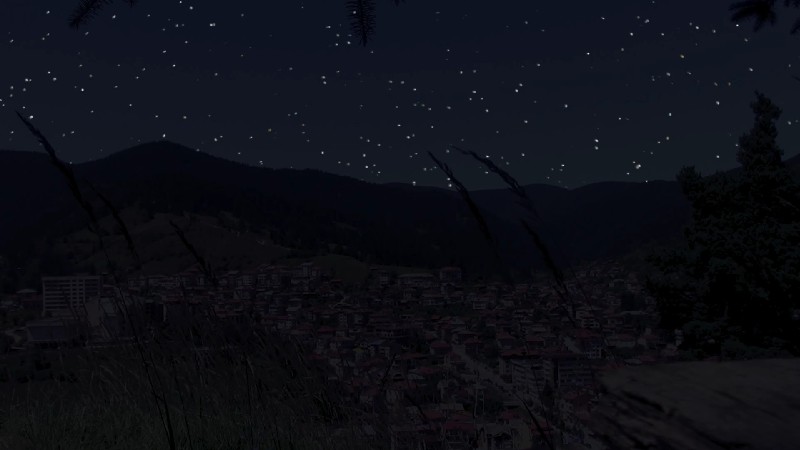
An Unreal Star Storm watched from the forests of the Rhodope Mountains, Bulgaria
The premiere of my new music video - a poetic and artistic production with beautiful 2D visual effects, produced using computer vision for automatic compositing, masks generation, objects removal etc. Edited and rendered using my inhouse software "Twenkid FX Studio".
Watch in darkness and on a big screen in 1920x1080!
"Twenkid FX Studio" is an endless "prototype" in which I've invested too little time and had to redesign a long time ago. Using Win32 sounds a bit insane, but my choice when I started was because there were issues with the usage of another "default" and having bad reputation simple windows library (MFC) - I used Visual Studio Express.
Sure, there were free GUI class-libraries, but I preferred a smaller code base that was not dependent on additional huge third-party libraries* such as wxWidgets (which was considered and maybe I was wrong not to develop with it).
Qt had some issues with the license - I didn't want my system to be GPL, and their other license fee was unreasonable. Maybe I could try GTK, but it's also bloated with a lot of dependencies and verbose method calls, similarly to wxWidgets, so apart from being multiplatform, I don't know would it be "simpler" to work with than Win32 or my own Win32 wrapper.
Furthermore, at the time when I started, FFmpeg or other Linux video libraries seemed undocumented/unaccessible, while I found a windows' one, although a bit outdated - VFW (Video for Windows). DirectShow was the more appropriate choice, but it seemed to me that it had more complex interface and harder access to the raw bitmap, so I decided to use VFW and not delve too much. Maybe I was wrong here again, I had to spend some more time on DirectShow.
(*Regarding huge code bases with too many fragmented modules - respectively I don't like Boost with its 999999 tiny little files, most of which not used.)
So I started with simple Win32, I developed also simple wrapper classes for some controls. I didn't care that it didn't look "beautiful" or "modern", the buttons look-and-feel was not important.
One reasonable design choice was to develop the GUI in C# with an interface to the core processing through pipes, sockets or memory mapping (file-mapping in Windows), it's still an option. It would go with a "standardized" interface to the core editor so that it could be controlled from all kinds of external GUIs. I did something like that with my speech synthesizer "Toshko 2.070", but only for simple input, not full API to its internals.
Another possibility is Lua and/or automatic generation of the GUI from the specifications.
...
Historically, there were years with zero or a few lines of code added to the project and unfortunately the editor's GUI is still underdeveloped and ugly for casual users which prevents it to be released for external usage out of my "in-house" needs.
It's pretty fast for some tasks, though. For example, Twenkid FX loads the long version of the "Star Symphony", including alternative disabled video segments and overlays, 200 full HD video files in total, for the first time in a fresh session in about6-7 seconds1.5-2 seconds from a laptop's mechanical HDD and external HDD. Maybe that's the total seek-time for so many files.
If the project is then closed and re-opened again, it loads and is ready in just 2 seconds.
(It seems that test run was with a highly loaded RAM and page-file slowing it down).
The GUI has to be improved, though, and possibly rewritten in a multiplatform way to escape that Windows dependency. I've been thinking about that from time to time, but it requires enough of focus to start.
Perhaps it would be based on FFmpeg, OpenCV and OpenGL, maybe using multiple programming languages (Python and C++, maybe others) with a custom GUI written on top of OpenGL and OpenCV or some light GUI or gaming library, unless I changed my mind and continued with Windows and a DirectX11-12
Also it's supposed to start utilizing some form of AI already, of course. Finally...
...
Custom VFX system and effects for the movie:
* Python,OpenCV with Python, Numpy; a little C++ and OpenCV in C++ for some retouch work of already rendered video segments during the final stage of the editing.
I started with Python because I had a prototype for simple reviewing and cutting, besides my main GUI NLE editor. Of course I was assuming that it would be easier to experiment with OpenCV, even though I knew it'd be slower, and initially I didn't know how far I'd go with the visual effects.
I could use C++ without a big hurdle, since I had experience and experiments with OpenCV C++ as well such as applying computer vision processing over pictures and frames of videos, traversing pixels and changing them during playback etc. The heavier editing system Twenkid FX C++/Direct3D9 was also an option, especially as HLSL shader, the only simple way to add new effects. However it needs a general and sophisticated plug-in subsystem, which is still lacking.
So I took the Python road this time.
It got too slow for some operations, then some tricks with Numpy fancy indexing sped it up, for one of the early effects: 60 times, from about 30 seconds per frame to about 0.5 seconds per frame. However it still remained slow for complex effects, sometimes taking several seconds per frame.
Ironically, the slow speed sometimes was "right", allowing real-time adjustments during rendering, virtual camera operating for Pan & Scan sequences etc., without slowing down the playback or stepping manually frame-by-frame.
Of course, I had better worked with C++ and GLSL or/and HLSL shaders from the start.
CogAlg Prize
Nevertheless that performance-wise wrong design decision and involvement with Python and Numpy directed me to check the CogAlg* project, then eventually to contribute to the debugging of the stuck frame_dblobs function and to win a prize.
Python is a bad choice for a "non-neuromorphic deep learning" for computer vision at the low level of the system, which is expected to require a zillion of operations before starting to produce meaningful output, though. Besides CogAlg's code is getting progressively unreadable.
This is another story, though.
* B.K. is the creator of "Cognitive Algorithm" project, but I recalled that I first called it with that shorthand "CogAlg" in an e-mail a few years ago, and he adopted it.